Community Integration & Microplanning
The inclusive development approach adapted by the Gadia VSSs under Sonepur FMU of Subarnapur DMU stands as a textbook example of community-led transformation. Rather than working in isolation, the VSS took an active, front-line role to integrate operations with multiple government line departments. This strategy successfully targeted and addressed various multifaceted development issues systematically identified during their microplanning process.
Traditional Safeguards & Assisted Reforestation
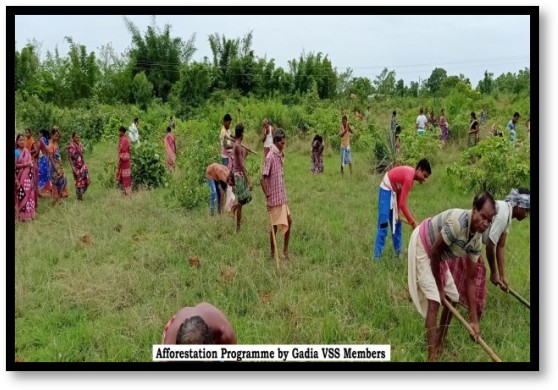
Assigned roughly 200 hectares of forest land for active protection and structural management, the members of Gadia VSS demonstrated immense enthusiasm towards their ecological stewardship. To curb illicit logging and forest exploitation, they institutionalized the traditional "Thengapalli" protection practice.
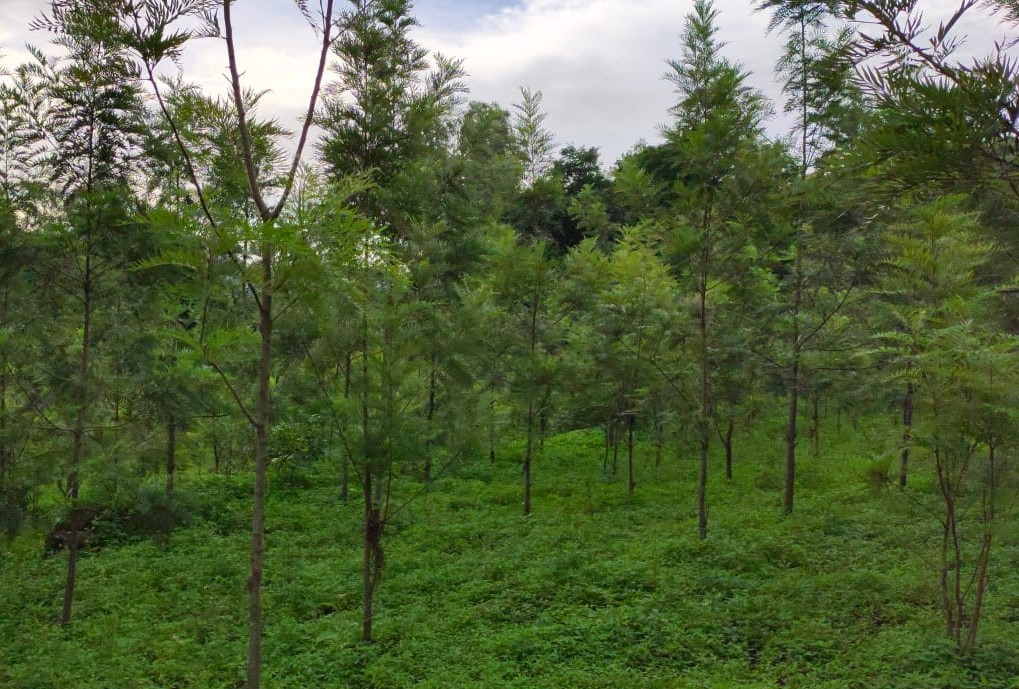
A structured 4-member patrolling team—drawn dynamically with one member from each family on a rotating calendar—protects the forest resources around the clock, all month long. Moving a step beyond protection, they identified denuded, barren fragments inside the canopy for targeted plantation. Key indigenous tree species systematically planted include:
Active Protection Strategy
The 4-member daily rotation ensures fair participation, deep ownership among the 194 households, and total coverage against forest degradation.
Socio-Economic Elevation Through Convergence
Recognizing that conservation relies on human well-being, Gadia VSS members extended their scope well beyond forestry boundaries into multi-sector social equity. By mobilizing women Self-Help Groups (SHGs), they laid structures ensuring the equitable distribution of micro-project benefits among all members.
To secure livelihood resilience, the community leveraged line-department convergence to implement robust irrigation installations for local agricultural fields. This convergent framework allowed the deployment of essential welfare infrastructure across the village landscape, significantly improving standard of living indicators across various pillars:
Health & Sanitation
Targeted programs promoting family health, sanitation systems, and cleaner living habits.
Social Safety Nets
Direct inclusion workflows connecting eligible residents to state safety-net programs.
Swachh Bharat Abhiyan
Community cleaning frameworks ensuring continuous waste management and cleanliness.
Clean Cooking Fuel
Mass scaling and setup of LPG connections, effectively reducing reliance on fuelwood.